

Opening a Business Bank Account in Poland
A bank account is not just a formality but a key part of running a business: client payments, taxes, ZUS, and international transfers all depend on it. In Poland, banks carefully verify entrepreneurs under KYC/AML procedures, so it is important to prepare the documents properly and clearly explain the nature of the business. We help open a business bank account for JDG or Sp. z o.o., prepare the document package, and go through the bank verification process without unnecessary risks.
What Is Important to Know
Before Opening an Account
-
Bank Verification (KYC/AML) Is Standard Practice
The bank analyzes your type of business activity, clients, countries involved in transfers, and projected turnover.
We prepare:
- a description of the business model;
- information about counterparties and countries;
- a projected turnover and the type of transactions.
-
An Account for JDG and for Sp. z o.o. Means Different Requirements
For a limited liability company, the list of documents and the depth of the verification are usually more extensive.
It depends on:
- the ownership structure;
- the presence of foreign beneficial owners;
- the type of activity (online/export/fintech, etc.).
-
Currency and International Transfers
Not every bank is equally convenient for working with the EU, the US, and payment systems.
We help you choose:
- a multi-currency account;
- convenient SWIFT/SEPA fees;
- the optimal model for working with invoices.
-
Typical Reasons for Rejection
A rejection is not an “accident” but the result of not meeting the bank’s expectations.
Most often, it is caused by:
- an unclear description of the activity;
- inconsistencies in the documents;
- elevated AML risks;
- a lack of logical consistency in the projected turnover.
Get a Free Consultation Right Now!
Leave a request and we will consult you as quickly as possible!
Video Testimonials
Our specialists are always ready to provide assistance and support on
at each stage of cooperation

Owner of VisaV.pl / Board Community Member

Head of VisaV.pl

Head of the legalization department, expert in document processing in Poland
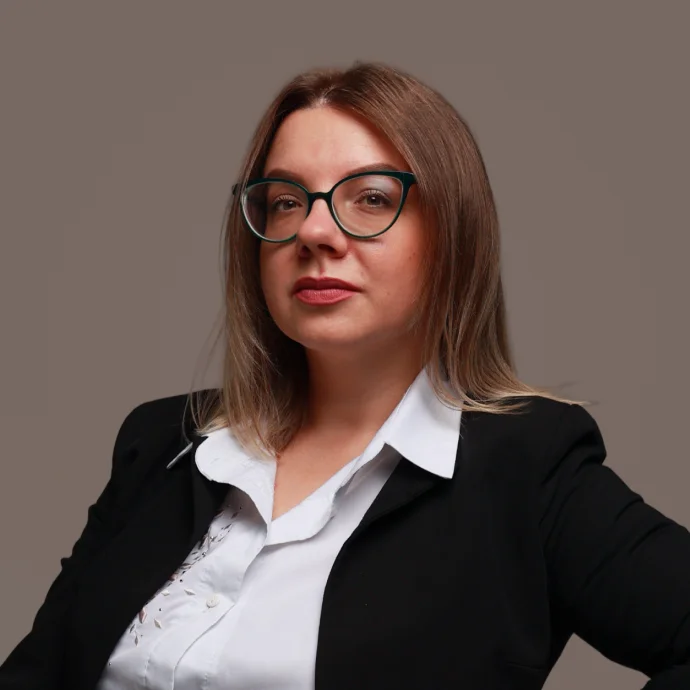
Legalization specialist in Warsaw.

Sales Manager, Communication and Customer Service Expert

Specialist in marriage registration and document processing

Legalization Specialist

SMM Specialist

Accounting Specialist

Legalization Specialist

Administrator

U.S. Marriage Organizer

Marriage Department Technical Specialist
Partner in Europe
We don't just provide services – we help you achieve your goals.
Our approach is based on trust, quality and individual approach. We work to ensure that each client receives a quick, convenient and effective solution to their issues.
We analyze your situation in detail and offer solutions that best suit your needs.
We work quickly without losing quality, and guarantee 100% compliance with legal requirements.
Our team is made up of experts who have helped thousands of clients with legalization and documents.
We accompany you at every stage, providing detailed advice and assistance in any issues.
The VisaV.pl team speaks Ukrainian and Russian, which makes communication easier for clients from the CIS countries.
Client Photo Reviews


















How to Open a Business Bank Account in Poland:
Procedure, Documents, and Bank Verification
Opening a business bank account in Poland is a separate procedure that goes beyond simply “registering a business.” Polish banks operate in line with European financial monitoring standards, so they assess not only the documents but also the real logic of your business activity. That is why preparing to open an account is a strategic step that affects the future stability of your business.
Below, we will look at the key points: which documents to prepare, how the verification process works, how an account for JDG differs from one for Sp. z o.o., and how to avoid account blocks in the future.
What documents are usually required
The basic package depends on the form of business, but usually includes:
For JDG:
- proof of business registration;
- an identity document;
- address details;
- a description of the activity and the planned transactions.
For Sp. z o.o.:
- incorporation documents;
- beneficial owner details;
- an extract from the register;
- information about the ownership structure;
- a description of the business model and projected turnover.
The bank may request additional explanations regarding clients, countries, payment systems, or the type of contracts. This is exactly where it is important that your response is clear and logical.
How the bank verification process works
The procedure usually includes several stages: submitting the application, document verification, internal compliance analysis, and sometimes additional questions or an interview. For certain types of business activity such as online services, marketing, IT, crypto-related businesses, or international trade, the verification may be more in-depth.
The bank pays attention to:
- whether the PKD codes match the actual activity;
- the countries from which funds will be received;
- the projected turnover;
- reputational risks;
- the transparency of income sources.
If the business model is described unclearly or the documents are submitted only formally, the risk of rejection or delays increases.
Choosing a bank: not only fees, but strategy too
A common mistake many entrepreneurs make is focusing only on low fees. In reality, it is important to assess:
- the bank’s stability;
- its experience in working with foreigners;
- its flexibility with international transactions;
- the quality of its online banking;
- the speed of its support service.
For a business involved in exports or marketplace operations, a multi-currency account and a clear approach to currency control may be necessary. For local services, a different model may be more suitable.
Currency operations and international payments
If you work with clients from the EU, the US, or other countries, it is important to set up the right payment structure from the start. The wrong account can lead to high fees or delays.
We take into account:
- the currency of invoices;
- the regularity of payments;
- work with payment systems;
- the risks of double transaction monitoring.
This makes it possible to work steadily from the very first month without “unexpected” account blocks.
How to avoid an account block after opening it
Opening the account is only the first step. Account blocks often happen because the declared activity does not match the real transactions or because of sudden changes in turnover.
To minimize the risks:
- do not go beyond the described business model without updating the information;
- keep contracts and proof of transactions;
- monitor the logic of your payments;
- inform the bank about any significant changes in the business activity.
Professional preparation for opening an account significantly reduces the risk of future problems.
Why professional support increases the chances of a positive decision
In practice, a bank rejection is often caused not by a “bad client” but by poor preparation. When documents and explanations are submitted in a structured, transparent, and logical way, the process goes much more smoothly.
We:
- analyze the business model before submission;
- prepare the document package;
- help formulate explanations for the bank;
- support you until the account is opened.
This helps avoid repeated applications and loss of time.
Frequently Asked Questions
For most companies, yes. For JDG, it is often recommended, especially when working with clients and taxes.
From a few days to a few weeks, depending on the form of business and the complexity of the verification.
Yes, the bank has the right to refuse without explaining the reasons.
In many cases, yes, but different formats are possible depending on the bank.
Yes, provided that the documents are ready.
Yes, because of the additional verification of beneficial owners and the ownership structure.
Yes, but the currency operations must be set up correctly.
Yes, the bank checks whether the activity matches the declared codes.
Yes, if the transactions raise suspicion or do not match the declared model.
To prepare for the verification, reduce the risk of rejection, and avoid account blocks in the future.