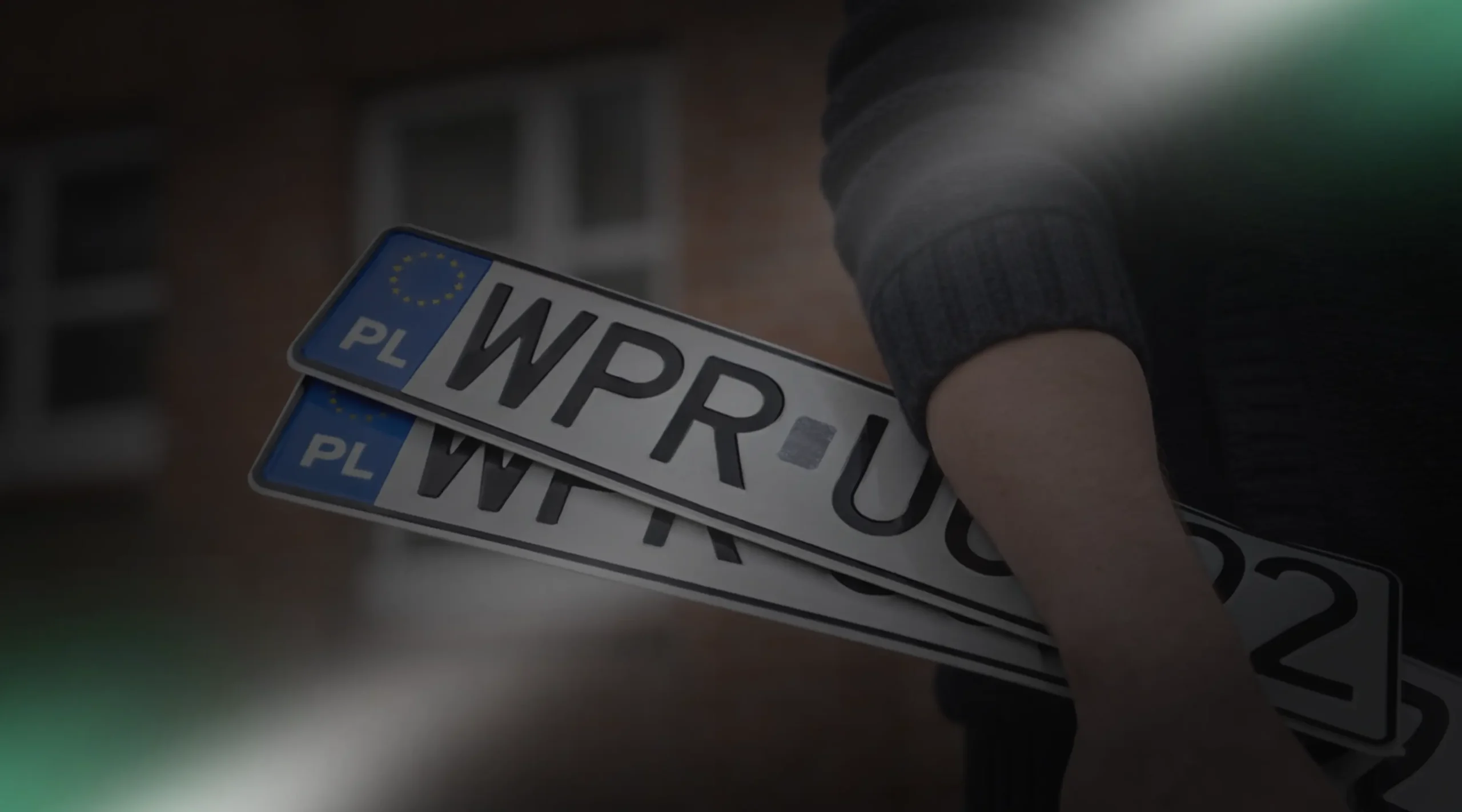

Consular Registration for a Car
Planning to travel to Ukraine by car from Poland or another EU country? Temporary/permanent consular registration is often a key requirement for bringing a car with foreign plates into Ukraine without paying customs duty and a cash deposit (or with minimal risks at the border). We will review your situation, prepare the document package, help with the appointment, and support you through to the result.
Consular Registration for Bringing a Car Into Ukraine:
How It Works and Who Needs It
-
What consular registration is and why it is “car-related” in your case
Consular registration is the official registration of a Ukrainian citizen who resides/is staying abroad. In everyday understanding, it may seem unrelated to cars. But for crossing the Ukrainian border in a car with foreign registration, this document can be decisive — it confirms that you genuinely live abroad and have the right to temporarily import your own vehicle without customs payments, provided the required conditions are met.
That is why searches such as “consular registration for a car,” “entering Ukraine on Polish plates,” or “temporary import of a car without a deposit” often lead to one practical solution: properly arranging consular registration and a supporting document package for customs.
Most often, consular registration is needed if:
- you are a Ukrainian citizen and are travelling to Ukraine in a car registered in Poland/the EU;
- you want to avoid the requirement to pay a deposit (as the “equivalent of customs clearance”);
- you are planning short trips to Ukraine within the permitted time limits.
-
Temporary or permanent consular registration: what to choose
There is temporary and permanent consular registration. The right option depends on your residence status abroad and the documents confirming it. For this “car-related” purpose, it is important not just to “get registered,” but to do it correctly for your grounds, so that no questions arise at the border.
We always begin with a short review: where you are staying, on what grounds, what documents you have, who the car is registered to, and whether your situation meets the temporary import requirements.
Temporary registration is usually suitable if:
- you are staying abroad lawfully (residence card/visa/another legal status);
- you have proof of your actual stay/residence.
Permanent registration is more often needed if:
- you officially reside abroad on a long-term basis;
- you have documents confirming long-term residence.
-
Conditions for Bringing a Car Into Ukraine on Foreign Registration (Poland/EU)
For many people, this is the most painful part: “I just want to go home in my Polish car — why are there so many nuances?” There really are nuances, and they need to be taken into account before the trip so there are no surprises at customs.
Typical conditions that are most often checked:
- entry in one vehicle that belongs to you (or you have lawful grounds to use it — depending on the case);
- the period the car may stay in Ukraine is limited (people often refer to up to 60 days in a calendar year — so it is important to plan your trips properly);
- the owner/the person entitled to import the vehicle must be behind the wheel;
- the car cannot be used as a “commercial vehicle” in Ukraine, transferred to other people, rented out, and so on;
- valid vehicle documents and insurance that is valid in Ukraine.
We explain the rules in plain language and build your plan so that it complies with the requirements and does not create unnecessary risks.
-
What documents are usually prepared and where people make mistakes
The most common reason for problems at the border is not the absence of documents, but small inconsistencies: the wrong status, the wrong supporting papers, expired documents, confusion over vehicle ownership, or an incorrectly prepared certificate.
Usually, for consular registration and trip preparation, the following are needed (the list depends on your situation):
- a Ukrainian international passport;
- proof of lawful stay abroad (residence card/visa/certificates — depending on the country);
- proof of address/residence (if required);
- vehicle documents: registration/vehicle registration certificate, proof of ownership;
- an insurance policy covering the territory of Ukraine (for the actual trip).
Typical mistakes:
- the car is registered to someone other than the person crossing the border as the “owner”;
- there is no clear proof of your actual residence abroad;
- the time limits for the car’s stay in Ukraine have not been taken into account;
- the insurance document is missing or incorrect.
-
How We Help: From Eligibility Review to a Ready Document Package
We structure the process so that the client does not have to “piece it together” from forums. First, we determine whether consular registration is really the best solution in your case and which type of registration you need. Then we prepare the document package, provide clear instructions, and support you until you receive confirmation.
What is included in our support:
- an analysis of your situation (country, status, car, ownership, time limits);
- a recommendation: temporary or permanent consular registration;
- a document checklist + assistance with preparation;
- appointment booking/filing coordination (within the capabilities of the consulate);
- travel instructions and a package of “what to show at the border” (nothing excessive, but everything necessary).
Get a Free Consultation Right Now!
Leave a request and we will consult you as quickly as possible!
Video Testimonials
Our specialists are always ready to provide assistance and support on
at each stage of cooperation

Owner of VisaV.pl / Board Community Member

Head of VisaV.pl

Head of the legalization department, expert in document processing in Poland

Legalization specialist in Warsaw.

Sales Manager, Communication and Customer Service Expert

Specialist in marriage registration and document processing

Legalization Specialist

SMM Specialist

Accounting Specialist

Legalization Specialist

Administrator

U.S. Marriage Organizer

Marriage Department Technical Specialist
Partner in Europe
We don't just provide services – we help you achieve your goals.
Our approach is based on trust, quality and individual approach. We work to ensure that each client receives a quick, convenient and effective solution to their issues.
We analyze your situation in detail and offer solutions that best suit your needs.
We work quickly without losing quality, and guarantee 100% compliance with legal requirements.
Our team is made up of experts who have helped thousands of clients with legalization and documents.
We accompany you at every stage, providing detailed advice and assistance in any issues.
The VisaV.pl team speaks Ukrainian and Russian, which makes communication easier for clients from the CIS countries.
Client Photo Reviews
















Consular Registration for Bringing a Car Into Ukraine —
Practical Nuances That Save Time and Nerves
Why a “deposit” may be required at the border and how to avoid it legally
When people say, “they asked me for money at customs,” they usually mean a deposit that may be equal to the amount of potential customs clearance. This is not always a “fine,” but rather a mechanism by which customs protects itself against the risk that the car will remain in Ukraine without proper clearance. If your situation falls under the lawful temporary import regime for citizens residing abroad, properly arranged consular registration together with supporting documents can significantly reduce the risk of such demands.
Important: we do not “promise magic,” because the decision at the border depends on whether you actually meet the conditions and have the proper documents. Our task is to make sure you have a logical, consistent package that does not raise questions.
Everyday scenarios: when consular registration really solves the problem
There are several recurring scenarios in which people most often seek help. For example, you live in Poland, have legal status, your car has Polish registration, and you need to travel to Ukraine for a few weeks. Or you bought a car in the EU and are planning a trip “home,” but are afraid that you may be turned back at the border or asked to pay a significant amount.
In such situations, consular registration is not a mere formality, but an “anchor” confirming your real connection to the country where you live abroad. That is why Google queries such as “how to enter Ukraine on Polish plates,” “temporary import of a car Poland Ukraine,” or “consular registration certificate for customs” often converge into one practical solution.
Restrictions it is better to know before departure
The worst thing is to learn about restrictions only at the border. That is why we always discuss them in advance and provide a short instruction on how to proceed in your specific case.
Usually, it is important to remember:
- the period for which the car may stay in Ukraine (and how it is calculated);
- the impossibility of transferring the car to other persons or using it to earn income in Ukraine;
- liability for violating the temporary import regime;
- the need to have valid documents and insurance.
Proper preparation works better here than any “life hacks,” because customs checks not your story, but your documents and the logic of your situation.
What the complexity of a case depends on (and why it works easily for some people, but not for others)
Two people may both be travelling in a “Polish car,” but one will pass in 10 minutes, while the other will face questions. The difference usually lies in the details: whose name is on the vehicle documents, what your status is, whether you have proof of residence abroad, whether the certificates are prepared correctly, and whether they do not contradict one another.
That is why we do not work from templates, but by checking the “weak points” in each case. If we see a risk, we warn you and suggest lawful ways to reduce it.
If you travel frequently between Ukraine and Poland: how to make the process predictable
For those who cross the border regularly, predictability is the most valuable thing. We help build a simple system: up-to-date documents, a clear package for the trip, and a proper understanding of time limits and the rules for using the car in Ukraine. This is not about “getting one paper once,” but about making sure you do not have annual stress before every trip.
Frequently Asked Questions
In many cases — yes, if you want to bring a car into Ukraine without a deposit/customs payments under the temporary import regime for Ukrainian citizens residing abroad. However, the answer depends on your status and the vehicle documents — we can advise you after a short review.
It depends on the grounds on which you live abroad and the documents you have. For some people, temporary registration is enough; for others, permanent registration is required — the important thing is that the registration matches your actual status.
Usually, the “without a deposit” regime is tied to the person who has the right to temporary import. In most cases, it is better to plan the trip so that the owner/authorized person with the correct documents is behind the wheel. We will advise you on how to arrange your scenario safely.
In typical cases, people refer to a limit of up to 60 days during a calendar year, but the nuances depend on your situation and the temporary import rules. It is important to calculate the time limits correctly and not violate the regime.
As a rule, no: a temporarily imported car cannot be transferred to other persons, rented out, or used for income-generating purposes. Violations can lead to serious consequences.
Such cases do happen, but they are the riskiest. The documents, the grounds for use, and the customs requirements all need to be reviewed. We will honestly tell you whether there is a real lawful option.
Yes, for actually using the car on the territory of Ukraine, you need insurance coverage that is valid in Ukraine. The exact policy depends on the situation and the type of trip.
The time frame depends on the consulate, the city, appointment availability, and document readiness. We help make the process as fast and predictable as possible: preparing the package without mistakes and reducing the risk of repeat submissions.
Part of the preparation can — yes: consultation, document review, instructions, and package preparation. However, the filing procedure itself depends on the specific consulate and its rules.
We cannot “guarantee a customs officer’s decision,” but we can guarantee proper preparation: a logical document package, compliance with the requirements, and a clear plan. This minimizes risks as much as possible and makes crossing the border more predictable.