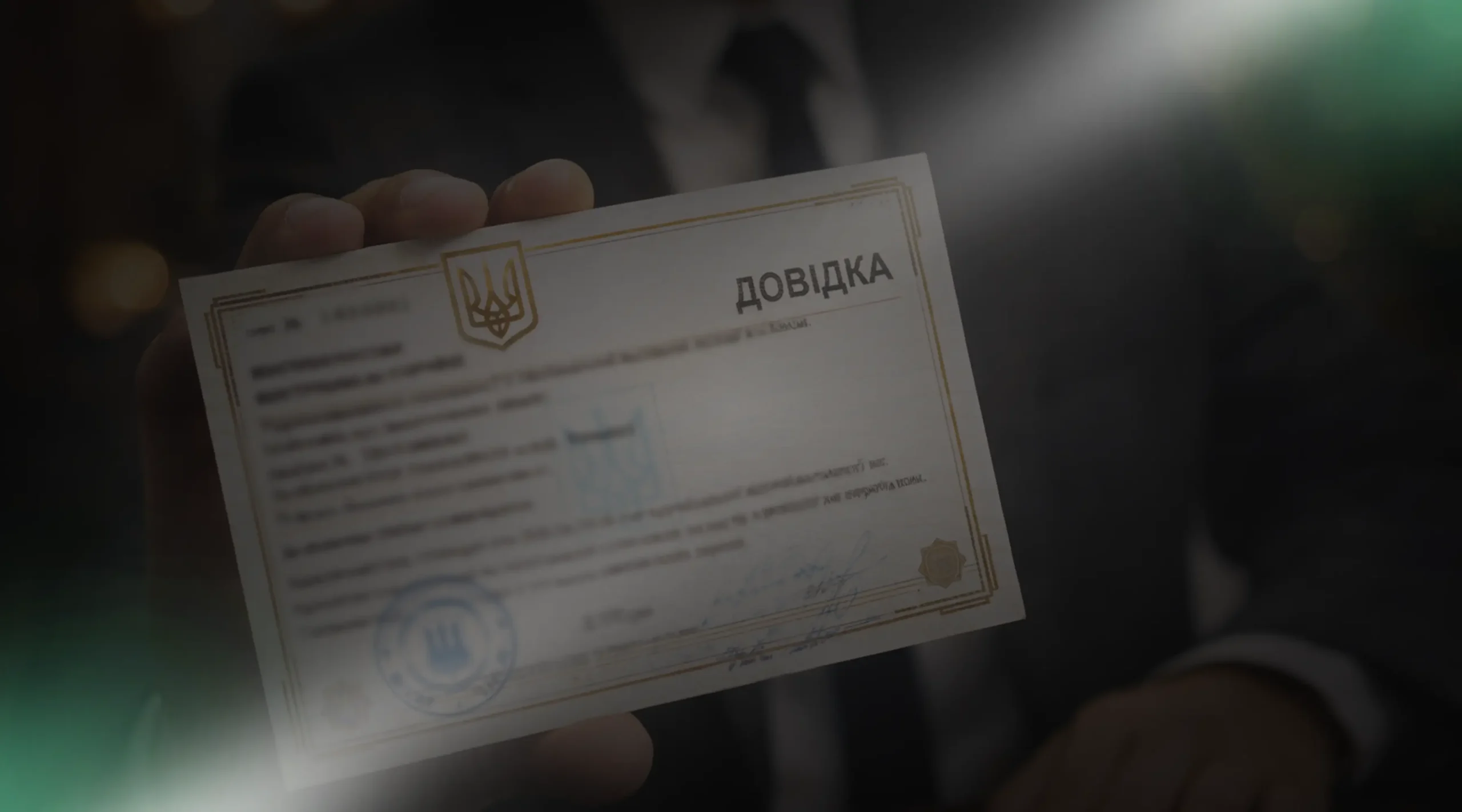
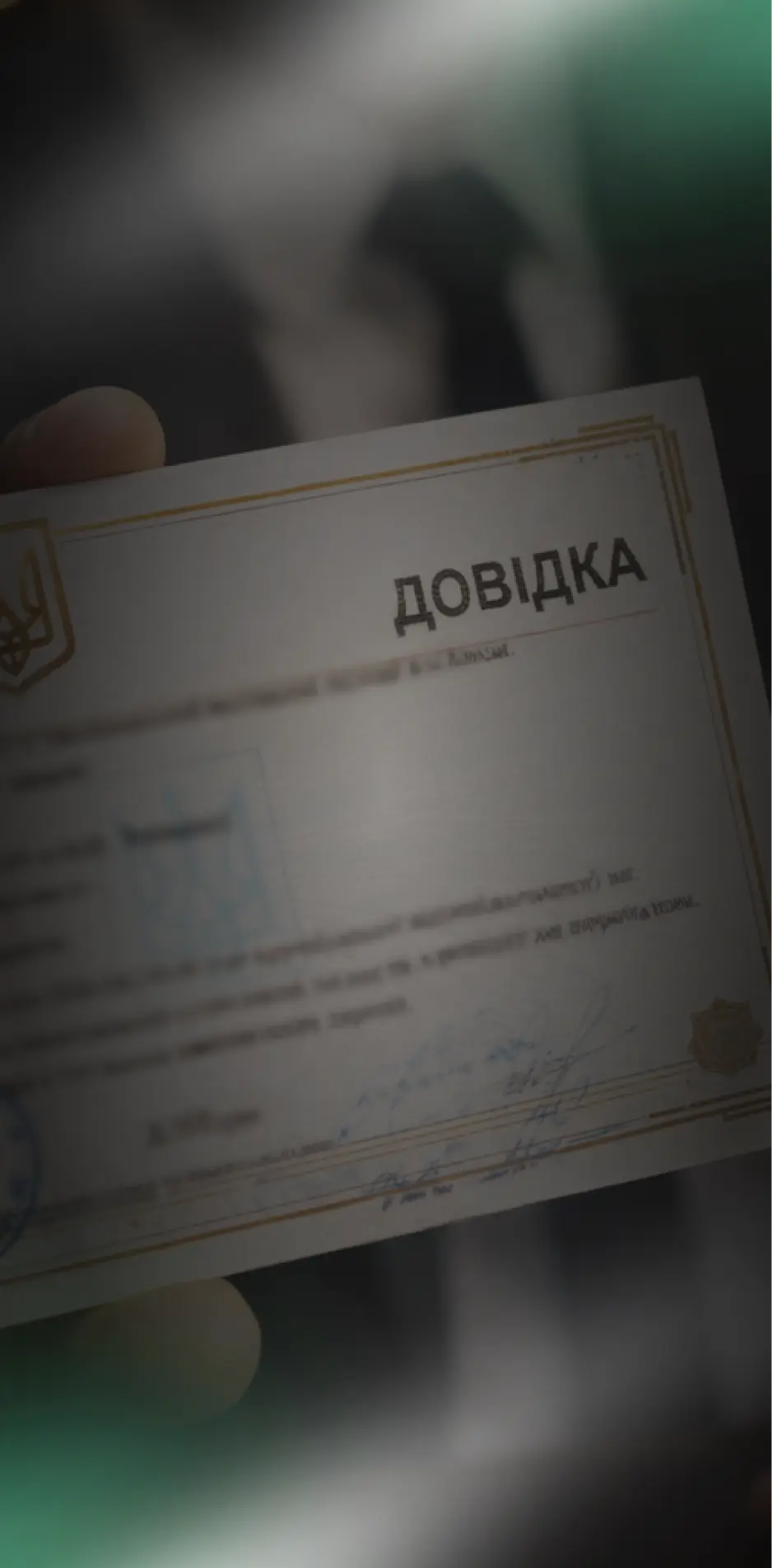
Certificate of Civil Status
A certificate of civil status is a document that is often required for getting married in Poland, submitting documents to the USC, as well as for other legal procedures where it is important to confirm your current marital status. We help obtain this certificate from Ukraine and other countries and prepare it correctly for use in Poland: we check the requirements of the specific USC, arrange an apostille/legalization, and provide a sworn translation.
When and Why a Certificate
of Civil Status Is Needed
-
For Marriage Registration in Poland (USC)
Most often, this certificate is required when a foreign national plans to get married in Poland. The USC must make sure there are no legal obstacles to the marriage, such as an existing prior marriage.
A certificate is usually required if:
- you do not have Polish civil status records;
- your previous marriages/divorces took place abroad;
- the USC requests a separate document from your country of citizenship.
-
To Confirm “No Legal Impediment to Marriage”
In many countries, this document may have different names, but the meaning is the same: to confirm that, according to your country’s official records, you are not married.
The document may be called:
- a certificate of marital status;
- a certificate confirming the absence of a registered marriage;
- a certificate of no impediment / no marriage record (in international practice).
-
For Complex Situations (Divorce, Widowhood, Different Surnames)
If you have been married before or have changed your surname, the USC may require clearer proof of your status or additional documents.
The following are often needed as well:
- a divorce certificate / court judgment;
- a death certificate of a husband/wife (in the event of widowhood);
- documents confirming a surname change.
-
For Legalization Procedures and Status Confirmation Before Authorities
Sometimes a certificate of marital status may also be requested by other authorities or institutions — for example, when handling certain legal actions, inheritance matters, or notarial procedures.
For the certificate to be accepted, it is important to:
- determine the correct document format;
- check its validity period;
- prepare the translation/apostille.
-
To Avoid Rejection by the USC and Postponement of the Wedding Date
The most common problem is when the certificate is in the wrong format, has no apostille, has an incorrect translation, or has expired. This can disrupt the planned ceremony date.
We help:
- select the correct document for the specific USC;
- check the validity period;
- prepare the document in a format that will be accepted.
Get a Free Consultation Right Now!
Leave a request and we will consult you as quickly as possible!
Video Testimonials
Our specialists are always ready to provide assistance and support on
at each stage of cooperation

Owner of VisaV.pl / Board Community Member

Head of VisaV.pl

Head of the legalization department, expert in document processing in Poland
Legalization specialist in Warsaw.
Sales Manager, Communication and Customer Service Expert

Specialist in marriage registration and document processing

Legalization Specialist

SMM Specialist

Accounting Specialist

Legalization Specialist

Administrator

U.S. Marriage Organizer

Marriage Department Technical Specialist
Partner in Europe
We don't just provide services – we help you achieve your goals.
Our approach is based on trust, quality and individual approach. We work to ensure that each client receives a quick, convenient and effective solution to their issues.
We analyze your situation in detail and offer solutions that best suit your needs.
We work quickly without losing quality, and guarantee 100% compliance with legal requirements.
Our team is made up of experts who have helped thousands of clients with legalization and documents.
We accompany you at every stage, providing detailed advice and assistance in any issues.
The VisaV.pl team speaks Ukrainian and Russian, which makes communication easier for clients from the CIS countries.
Client Photo Reviews

Certificate of Civil Status for Poland —
Requirements, Preparation, and Common Mistakes
A certificate of civil status is one of the most important documents when a foreign national is registering a marriage in Poland. In practice, this is exactly the document that most often causes delays for couples: different USC offices have their own approaches to wording, validity periods, and legalization requirements. That is why it is important not only to “obtain the certificate,” but also to prepare it in a way that ensures it will be accepted without additional requests.
The situation is further complicated by the fact that in Ukraine and other countries, such certificates may be issued by different authorities, with different wording and varying amounts of information. Some certificates contain only the phrase “not married,” while others include references to official records, dates, place of residence, and passport details. For Poland, it is important that the certificate clearly identifies the person and confirms the absence of a valid marriage.
What the Certificate Must Include: Content, Details, and Validity Period
For the certificate to be accepted, it must be an official document issued by a competent authority in your country and contain basic identifying information. For the USC, it is important to understand who you are, on the basis of which records/data the certificate was issued, and exactly what it confirms.
The certificate should usually include:
- full name (as in the passport);
- date of birth;
- document number (passport/ID — if indicated);
- a clear statement of marital status or confirmation of no marriage;
- stamp, signature, and date of issue.
A separate nuance is the validity period. Many USC offices accept certificates issued no more than a certain amount of time ago (for example, 3–6 months), but this may vary. That is why, before applying, we recommend checking the requirements of the specific USC to avoid discovering that the certificate is “too old.”
Apostille / Legalization and Sworn Translation — How to Prepare the Document for Poland
If the certificate was issued outside Poland, in most cases it must undergo international legalization in order to be used: an apostille (for countries that are parties to the Hague Convention) or consular legalization (for other states). Without this, the USC may refuse to accept the document, even if the text of the certificate itself is correct.
After legalization, a sworn translation into Polish is required. It is important that the translation include not only the text of the certificate itself, but also the stamps, signatures, seals, and apostille. This is where mistakes often happen: the translation is done by a regular translator, key details are omitted, or the apostille is not translated — and the USC refuses to accept the document.
To avoid problems, it is worth checking:
- whether an apostille is required specifically for your certificate;
- whether the apostille has been issued correctly (where and by whom it was issued);
- whether the translation has been prepared by a sworn translator (tłumacz przysięgły).
Previous Marriage, Divorce, Widowhood — What Additional Documents May Be Required
If you have been married before, a certificate of marital status alone may not be enough. The USC may ask you to confirm on what basis the previous marriage was terminated in order to rule out any legal obstacles to a new marriage.
In such cases, the following may additionally be required:
- a divorce certificate or court judgment;
- a certificate confirming that the court decision has entered into legal force;
- a death certificate (if you are a widow/widower);
- documents confirming a surname change.
One practical point: if different documents contain different spellings of your first name/surname, especially after transliteration, these should be aligned in advance. Otherwise, the USC may require an explanation or supporting certificates confirming that all documents refer to the same person.
Common Mistakes That Cause the USC to Refuse or Postpone Registration
Most refusals or delays happen not because the case is “complicated,” but because of formal issues. People bring a certificate, but it does not meet the USC’s expectations — and the procedure comes to a halt.
The most common reasons are:
- the certificate was issued by the wrong authority;
- the apostille is missing or not acceptable;
- the document has expired under USC requirements;
- the translation is not sworn or is incomplete;
- the certificate does not contain key identifying details;
- there are discrepancies between the full name on the certificate and the passport.
To avoid this, it is important to check the requirements of your specific USC in advance, rather than relying on “how it was done by friends.” Even in different cities across Poland, the rules may differ in practice.
How We Help Obtain the Certificate and Prepare It “for the USC”
We do not work simply as “intermediaries,” but as a team focused on the result: making sure your document is accepted. First, we clarify exactly what the certificate is needed for — marriage in Poland, USC submission, or a residence card application package — and assess what additional documents may be required.
Then we help:
- determine the correct type of certificate and issuing authority;
- prepare the document for apostille/legalization;
- arrange a sworn translation;
- check the validity period and consistency of the information.
As a result, you receive a document that meets the requirements and minimize the risk of hearing, “It has been returned — please provide additional documents.”
Frequently Asked Questions
Most often yes, especially for foreign nationals — but the requirements depend on the USC.
It depends on the USC, but usually 3–6 months.
In most cases, yes, if the document was issued abroad.
No, usually a tłumacz przysięgły is required.
In many cases, documents confirming divorce/widowhood are also required.
In many cases, yes — it depends on the country and the issuing authority.
Because of the format, issuing authority, missing apostille, expiration, or translation issues.
Sometimes yes — it depends on the procedure in your country.
Yes, if the apostille is part of the document.
To avoid wasting time, postponing the wedding date, and having to prepare the documents twice.