Sworn Translation of Documents
A sworn translation (tłumaczenie przysięgłe) is an official translation of documents performed by a sworn translator who is authorized by the state and legally responsible for the accuracy of the translation. Such translations are accepted by voivodeship offices (wojewódzki urząd), USC, courts, tax authorities, educational institutions, and employers.
When You Need
a Sworn Translation in Poland
-
For a residence card and other matters at the voivodeship office
When applying for a temporary residence permit/residence card, you often need sworn translations of documents issued in a language other than Polish.
Most commonly translated:
- birth, marriage, and divorce certificates;
- police clearance certificates;
- employment/education documents;
- contracts and proof of income (if required).
-
For USC: marriage registration and civil status records
Urząd Stanu Cywilnego (USC) may require sworn translations to register a marriage or to make changes to civil status records.
Typically required:
- certificates and documents from your home country;
- documents related to a previous marriage/divorce;
- court decisions (where applicable).
-
For court and legal procedures
In court cases in Poland, legal precision is essential, so sworn translation is the standard.
Examples:
- claims and court rulings;
- powers of attorney;
- documents related to custody/alimony;
- documents for a lawyer/notary.
-
For studies, nostrification, and employment
Universities, schools, employers, and licensing bodies often require official translations of documents.
Commonly translated:
- diplomas and transcripts/supplements;
- employment certificates;
- certificates and licenses.
-
Fast — and without “returned for corrections”
We’ll advise you on the right format and check for common mistakes before your documents go to the translator.
You receive:
- a clear action plan;
- the most convenient way to submit your documents;
- a translation that institutions accept.
Get a Free Consultation Right Now!
Leave a request and we will consult you as quickly as possible!
Video Testimonials
Our specialists are always ready to provide assistance and support on
at each stage of cooperation

Owner of VisaV.pl / Board Community Member

Head of VisaV.pl

Head of the legalization department, expert in document processing in Poland
Legalization specialist in Warsaw.
Sales Manager, Communication and Customer Service Expert

Specialist in marriage registration and document processing

Legalization Specialist

SMM Specialist

Accounting Specialist

Legalization Specialist

Administrator

U.S. Marriage Organizer

Marriage Department Technical Specialist
Partner in Europe
We don't just provide services – we help you achieve your goals.
Our approach is based on trust, quality and individual approach. We work to ensure that each client receives a quick, convenient and effective solution to their issues.
We analyze your situation in detail and offer solutions that best suit your needs.
We work quickly without losing quality, and guarantee 100% compliance with legal requirements.
Our team is made up of experts who have helped thousands of clients with legalization and documents.
We accompany you at every stage, providing detailed advice and assistance in any issues.
The VisaV.pl team speaks Ukrainian and Russian, which makes communication easier for clients from the CIS countries.
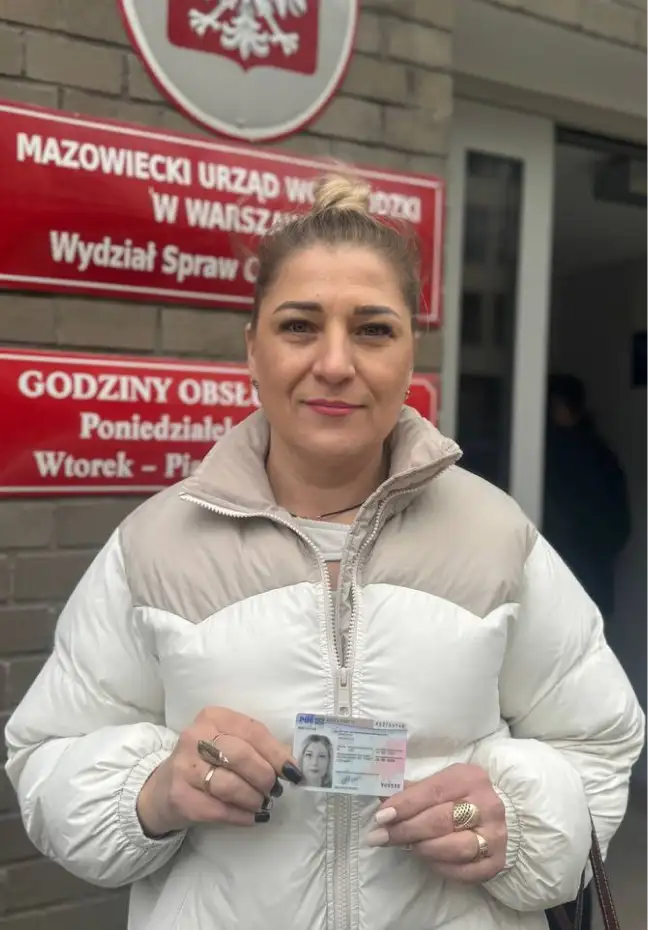
Client Photo Reviews





Sworn Translation of Documents in Poland:
How It Works, What to Prepare, and How to Avoid Rejections
Sworn translation in Poland is not just “translating text.” It is a legally significant document that must meet the requirements of Polish institutions. Even a minor inaccuracy in a surname, date, place of birth, or the name of an issuing authority can cause problems: the office may request corrections, USC may postpone your case, and an employer or university may return your document package “for revision.” That’s why it’s important to get a sworn translation right the first time — with the specific institution you’re submitting to in mind.
Another important nuance: different institutions may interpret requirements differently. For example, one gmina may accept a translation made from a scan, while another may require a translation from the original or from a certified copy. That’s why, before ordering a translation, we recommend briefly confirming or double-checking the requirements — so you don’t pay twice and lose time.
What “tłumaczenie przysięgłe” is and how it differs from a regular translation
A sworn translation is performed by a translator listed in the official register, authorized to certify translations with a stamp and signature. The translation has legal force, and the translator is accountable for its accuracy before state authorities. This is the main reason Polish institutions require sworn translations for documents that affect a person’s legal status or are used in official registers.
In practice, a sworn translation follows a specific format: the translator states which document the translation is based on and reproduces notes, stamps, signatures, and other elements present on the original. This matters because, in official matters, it’s not only the “text” that counts, but also the document’s details — who issued it, when, on what basis, and whether it contains a seal.
Sworn translations are most often required for:
- the voivodeship office (wojewódzki urząd) (residence card, citizenship, etc.);
- USC (civil status records);
- courts and a notary;
- studies, nostrification, and licensing.
Original, copy, or scan: what institutions actually accept
One of the most common questions we hear is: “Can it be done from a scan?” The answer depends on the institution and the type of document. In many cases, a translator can prepare a sworn translation from a scan, but the scan must be high quality: stamps, signatures, the document series/number, and all fields must be clearly visible.
In more sensitive procedures (especially USC or court matters), they may require a translation from the original or from a certified copy. If you submit a translation “from a scan,” you may be asked to redo it properly — and you will lose both time and money.
The best strategy is:
- identify the institution and the purpose of the translation;
- confirm the requirements for the document format;
- provide the translator with the document in the correct form.
We help you:
- assess scan quality and risks;
- understand when the original is required;
- prepare a complete package without unnecessary “re-translations.”
Apostille and legalization: when a translation doesn’t solve everything
A sworn translation confirms the accuracy of the translated content, but it does not replace international legalization of a document. In some cases, a Polish institution may require the document to be apostilled or legalized (depending on the country that issued the document and the document type).
This is critical in cases where a document is entered into Polish registers — for example, civil status records, court decisions, or education documents. If an apostille is required but missing, even a perfect translation won’t help, because the institution will not accept the underlying document in the first place.
When it’s worth checking apostille/legalization requirements:
- birth/marriage/divorce certificates for USC;
- court decisions;
- diplomas and supplements for nostrification;
- documents issued by government authorities.
We will tell you whether it makes sense to translate now or whether it’s better to obtain an apostille first — so you don’t have to do the work twice.
Common translation mistakes and why they can stall your case
In real cases, issues often come down to small details. The most common are:
- different spellings of a name/surname across documents;
- incorrect transliteration;
- missing translations of seals/stamps/notes;
- errors in dates or places;
- translation based on the “wrong” document (incomplete or cropped scan, missing series/number).
This is especially important when documents form a “chain” — for example, for a residence card, where one document supports another. If something is rendered differently in one translation, the office may request explanations or additional documents.
To prevent this, we:
- cross-check details across documents (full name, dates, numbers);
- advise which documents to translate first;
- help assemble a package tailored to your specific procedure.
Timelines and cost: what they depend on and how to plan
The cost of a sworn translation usually depends on length, complexity, urgency, and document type. Some documents may look “short,” but contain many details, stamps, and annotations — which increases the amount of work.
Timing also matters. If you are submitting documents to a voivodeship office, USC, or a court, it’s best not to leave translations to the last day. Even if a translator can do it urgently, there are always risks: an original may be required, apostille requirements may need to be clarified, a page may be missing, or inconsistencies may have to be explained correctly.
A safe planning checklist:
- make a list of documents;
- identify where you will submit them;
- allow time to confirm requirements and make corrections.
How we help: from choosing a translator to a submission-ready package
Our approach is not “just a translation,” but an outcome that will be accepted. We help prepare your documents so the institution doesn’t return your package or ask you to “bring additional translations.”
Typically, we:
- Assess your goal (residence card / USC / court / studies).
- Create a list of documents that need translation.
- Check whether an apostille/legalization is required.
- Agree on the format: original/copy/scan.
- Arrange the sworn translation and a final review.
This is especially helpful when you are working against a deadline and mistakes can cost you months of delay.
Frequently Asked Questions
A sworn translation has legal force and is certified with the translator’s stamp and signature.
Sometimes, yes — but it depends on the institution and the document type.
Often, yes — especially if the apostille is part of the document and is important for the institution.
Certificates, official statements, employment/education documents, and proof of family status.
It depends on the volume and the translator’s workload; urgent processing is possible by agreement.
It can be translated, but the institution may require the document to be corrected in the issuing country.
Yes, as long as they are done by an officially registered sworn translator.
It depends on the procedure. Often only the data page and relevant stamps/entries are translated.
Often yes — for diplomas, supplements/transcripts, and certificates.
To avoid “wrong format,” data errors, and having to pay for repeat translations.