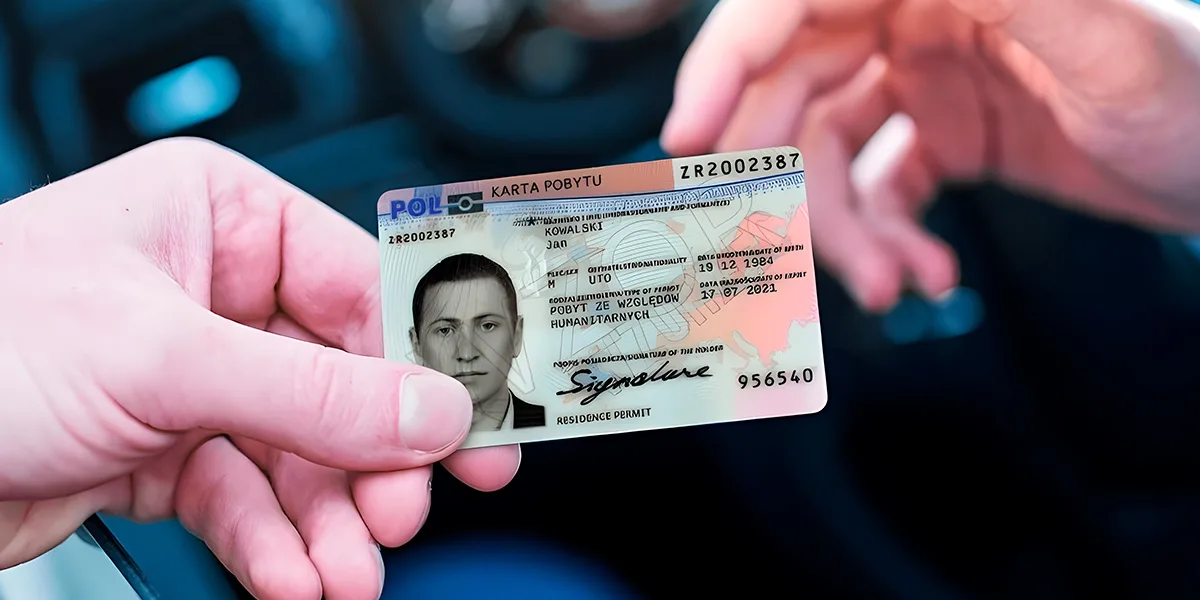
Waiting for a residence card is one of the hardest parts of the entire legalization process in Poland. A person submits documents, receives confirmation, sometimes gives fingerprints, and then the most unpleasant part begins: silence, uncertainty, and the constant question in their mind — how much longer do I have to wait? And these are not isolated cases. Polish state and oversight authorities have repeatedly confirmed that delays in residence legalization cases remain a systemic problem, and in some voivodeships the review times have reached many months and even years.
The biggest mistake in such a situation is to think that “this is normal, so I just have to wait quietly.” In reality, not every delay is neutral. Sometimes a long wait is connected with the urząd being overloaded, and sometimes with formal deficiencies, a missed request, weak supporting evidence, or the fact that the case has effectively “stalled” without movement. That is why it is important not just to endure it, but to understand at what stage your delay has occurred, why it happened, and what legal tools you have to influence the situation.
What Stages a Residence Card Case Consists of and Where Delays Most Often Occur
To understand why a residence card does not arrive “on time,” you need to break the process down into stages. Usually, the case goes through the following steps: preparing the application form, collecting documents, paying the fee, submitting documents, checking formal requirements, biometrics, analysis of evidence for the legal basis, possible requests to provide additional documents, the decision, and then the production of the plastic card itself. Official materials for foreigners in the voivodeships clearly show that after submission the case does not move “automatically,” but goes through a number of separate procedural stages.
What usually takes the most time is not the plastic card itself, but the case review stage. This is where the urząd checks documents, may request additional materials, send a summons for biometrics, analyze income, work, business, or family circumstances. If the package was submitted weakly or with formal deficiencies, the case starts moving in bursts: the urząd sends a letter, the applicant responds, then another pause follows. And this can continue for months.
What Review Timelines Formally Exist — and Why in Reality Everything Is More Complicated
In Polish administrative law, there is a general logic of deadlines, and some procedures for foreigners also have legally defined timeframes. For example, the current official UdSC instructions for some procedures directly indicate 60 days from the moment a complete set of documents is submitted, and if there are formal deficiencies, the countdown begins only after they are corrected. This is an important detail: the urząd almost never counts the period “from the first submission” if it believes the case needed to be supplemented.
However, in residence legalization cases handled by voivodeship offices, the situation has been significantly affected by the temporary suspension of administrative time limits. The Office for Foreigners officially announced that until March 4, 2026, the suspension of time limits has been extended for certain residence legalization cases handled by voivodeship urzęds. At the same time, the institution separately emphasizes that this does not mean cases should not be reviewed; applications continue to be accepted and must still be processed. But in practice, this regime significantly reduces procedural pressure on the urzęds and weakens the position of an applicant who wants to complain specifically about a violation of deadlines.

Why a Residence Card is Really Delayed: the Main Reasons Without Myths
The most obvious reason is the overload of voivodeship urzęds. This is not only the feeling of foreigners, but also the conclusion of state and oversight institutions. The Commissioner for Human Rights has repeatedly pointed out that voivodeships face a growing number of applications and a shortage of staff, making timely case review practically impossible.
But there is also a second reason that is often left unspoken: the quality of the application itself. If the case was submitted without some of the documents, with inconsistencies, weak proof of income or residence, without sworn translations, or with “gaps” in the logic of the legal basis, the urząd begins sending requests, and this automatically prolongs the path to a decision. People often think they simply “ended up in a long queue,” while in fact their case has already been sitting for several months at the supplementation stage or is waiting for a response to a wezwanie.
The third reason is chaos in communication. Postal letters may arrive late, people change their address and do not notify the urząd, miss biometric appointments, or learn about a request too late. That is why long waiting is often not “one problem,” but a combination of the urząd’s workload and the applicant’s own passivity.
What Official Inspections Showed: These are Not “Isolated Cases”
The problem of delays is not something applicants invented. The Supreme Audit Office of Poland (NIK) in its inspections directly pointed to serious delays, inactivity, and organizational problems in the work of voivodeship urzęds. Specific inspection materials recorded very long average review times, staffing and organizational problems, as well as insufficient conditions for timely service for foreigners. For example, in inspection materials for 2025, NIK noted that despite attempts to improve operations, in some urzęds the conditions for quick and timely case review remained insufficient.
This is important for one reason: if you are waiting too long, your situation is not “strange” or “exceptional.” Delays in legalization cases are a systemic phenomenon recognized by both oversight and human rights institutions in Poland. But precisely because the problem is systemic, you should not wait hoping that “it will somehow resolve itself.” Control is needed and, when necessary, a written response.
What to Do If the Review Is Dragging on: From Calm Steps to Tougher Tools
The first thing to do is to check the actual stage of the case. Not on the level of “I submitted it a few months ago,” but specifically: has the application been registered, were there formal deficiencies, is there a wezwanie, have biometrics been scheduled, is there already a draft decision. In different voivodeships, different channels are available for this: online systems, contact centers, e-mail, or phone lines. For example, the Mazovian Voivodeship officially recommends using the contact center and the inPOL portal to monitor foreigners’ cases.
Second — if the case is truly standing still without movement or the timeframe has already clearly exceeded what is reasonable, you can consider a ponaglenie — an official instrument against inactivity or excessive length of proceedings. This is not an “emotional complaint,” but a formal administrative action provided for by Polish procedure. The biznes.gov.pl portal directly explains that a ponaglenie may be submitted both in cases of inactivity by the authority and in cases of excessively slow handling of a case.
Third — if even after that the case still does not move, in certain situations a complaint to the administrative court is considered regarding inactivity or excessive length of proceedings. And here there is an important nuance: even despite the suspension of procedural time limits in some cases, the problem of inactivity by authorities does not cease to be a subject of legal disputes. In 2025, the Commissioner for Human Rights directly pointed out that delays deprive foreigners of real protection tools and affect their family and professional life.
Can a Residence Card Really Be Accelerated
It is worth saying honestly: there is no universal “speed-up” button. No one can legally guarantee that the urząd will issue a decision “within two weeks.” But there are actions that really affect the speed of review or, at the very least, remove unnecessary delays.
- Submitting a complete and strong package without formal mistakes.
- Responding promptly to a wezwanie and to all letters from the urząd.
- Monitoring the case status instead of waiting passively.
- Using written instruments of influence if the case is clearly being delayed.
- Systematic support, when someone is tracking your case instead of remembering about it once every three months.
In practice, it is the quality of the initial submission and the speed of reaction to requests that most often determine whether your case will be handled “normally slowly” or “painfully slowly.” And this is the block the applicant can actually influence.
Why It Is Calmer With Us
In situations where a residence card is delayed, a person usually suffers not only because of the timeline, but also because of uncertainty. They do not know whether the case is moving at all, whether they need to submit something additional, whether they can already file a ponaglenie or whether it is still too early, and whether doing so might worsen their situation. This is exactly where not just “advice from the internet” is needed, but systematic support.
At VisaV.pl, we work officially, we have experienced lawyers and offices, so we look at the case not “in general,” but on the merits: at what stage it got stuck, what can actually be done, whether there is a risk of a missed letter, whether a written response is already needed, or whether it is better first to close weak points in the documents. This approach does not promise magic, but it really reduces the chaos that makes waiting the hardest part.
Conclusion
A long wait for a residence card in Poland is a real systemic problem recognized by both state institutions and oversight bodies. But this does not mean that the applicant should simply wait silently for years. There is a difference between “the case is taking a long time because of overload” and “the case has stalled because there is a problem in it or because no one is reacting to it at all.”
That is why the best strategy is not to sit in an information vacuum. Check the status, monitor your mail, do not miss a wezwanie, and if the timeframe has long gone beyond what is reasonable — act in writing and with legal competence. If you want to understand what is happening specifically in your case, contact VisaV.pl. We will help assess the situation, explain the real options for action, and help you get through this stage much more calmly.