Polish citizenship is more than just a document. It gives you freedom of movement throughout the European Union, the right to live and work in any EU country, and access to Poland’s education, healthcare, and social security systems. One of the legitimate ways to obtain it is by confirming citizenship through the Voivode. This procedure is less well known than naturalisation, but for certain applicants, it can be considerably faster and simpler.
Below, we explain in detail who is eligible, how to apply, what the authorities verify, and where problems most commonly arise.
What Is Confirmation of Citizenship Through the Voivode?
There are several ways to obtain citizenship in Poland. The best-known option is naturalisation through the President after 5 or 10 years of legal residence. However, there is another route: confirmation of possession of Polish citizenship (potwierdzenie posiadania obywatelstwa polskiego). The application is reviewed by the Voivode, a regional executive authority.
The purpose of this procedure is not for a person to “receive” citizenship, but to confirm that they already possess it by descent. Polish citizenship is passed down by blood, and if your ancestor was a Polish citizen and did not lose that status, there may be grounds to conclude that citizenship was automatically passed on to you.
Who Is Eligible for Confirmation of Citizenship Through the Voivode?
This procedure is available to people who can prove Polish ancestry in a direct ascending line. For example:
- Your father or mother was a Polish citizen at the time of your birth
- Your grandfather or grandmother was a Polish citizen, and that citizenship was passed down through your parent
- Your great-grandfather or great-grandmother was a Polish citizen — in some cases, the family line can be traced even further back, although every additional generation makes the case more complex
The key requirement is that the ancestor must not have lost Polish citizenship. This is where the legal nuances begin, and they can undermine many otherwise promising cases.
When Is Citizenship Considered to Have Been Passed Down, and When Is It Considered Lost?
Polish citizenship law changed several times during the twentieth century. Each version of the law introduced its own rules on the transmission and loss of citizenship. Understanding this is critically important because the Voivode assesses the case according to the law that was in force at the time of the applicant’s birth and at the time the ancestor acquired or lost citizenship.
In simplified terms, the main periods are as follows:
- Before 1920 — these cases are complicated because archival records must be used to determine which state the ancestor was a citizen or subject of
- From 1920 to 1951 — citizenship law provided that a Polish woman who married a foreign citizen could automatically lose her Polish citizenship
- After 1951 — new rules came into force, and women no longer lost citizenship as a result of marriage
- After 1962 — acquiring foreign citizenship no longer automatically resulted in the loss of Polish citizenship

What Documents Are Required to Apply?
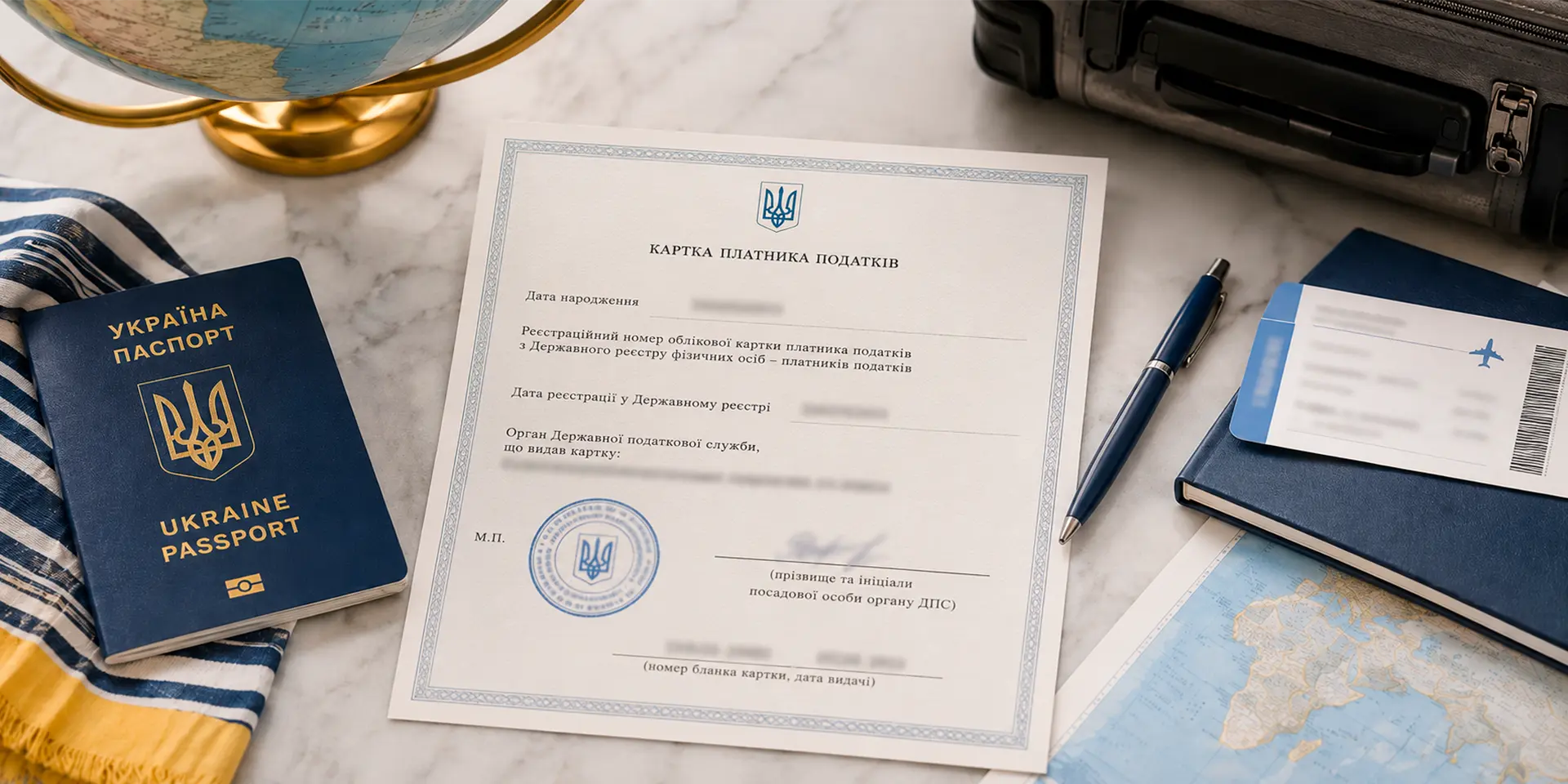
This is the most difficult part of the entire process. You need to provide not only your own documents, but also documents covering the entire family line from you to your Polish ancestor. A separate set of documents is required for each generation.
The basic list of documents for the applicant includes:
- An application in the prescribed form
- A passport and a copy
- The applicant’s birth certificate, with an apostille and a certified translation
- The parents’ birth certificates
- Marriage and divorce certificates covering the entire family line, if any surnames changed
- Documents relating to the Polish ancestor: civil status records, documents confirming Polish citizenship, and archival certificates
- Evidence that the ancestor did NOT lose Polish citizenship
This is where the main difficulty arises: most of the required records must be located in Ukrainian, Polish, or former Soviet archives. Some may have been destroyed, while others may be held in territories currently under occupation.
Where and How to Submit the Documents
The application is submitted to the Voivodeship Office (Urząd Wojewódzki) responsible for your place of residence in Poland. If you live abroad, you may apply through a Polish consulate in your country, although the case will still ultimately be forwarded to a Voivode for consideration.
The process generally consists of the following steps:
- Collecting and preparing the complete set of documents
- Booking an appointment with the relevant department of the Voivodeship Office
- Submitting the documents in person
- Waiting for a decision — from several months to a year or longer, depending on the voivodeship and the complexity of the case
- Receiving the decision: confirmation of citizenship or a reasoned refusal
- If citizenship is confirmed, applying for a Polish passport
Important: during the proceedings, the Voivode may request additional documents. Such requests must not be ignored, as failure to respond may lead to a refusal.
How Long Does the Process Take, and What Happens After Submission?
The official processing time is up to 30 days, but in practice this deadline is rarely met. Typical processing times in different voivodeships are:
- Mazowieckie Voivodeship (Warsaw) — from 6 to 12 months
- Małopolskie Voivodeship (Kraków) — from 4 to 8 months
- Dolnośląskie Voivodeship (Wrocław) — from 3 to 6 months
- Pomorskie Voivodeship (Gdańsk) — from 4 to 9 months
Processing times depend on the workload of the relevant department, the complexity of the case, and whether the submitted documents are complete. An incomplete application almost always leads to delays.
What to Do if Your Application Is Refused
A refusal by the Voivode is not necessarily the end of the process. The decision can be appealed through the administrative procedure. The first appeal is submitted to the Minister of the Interior and Administration (MSWiA). If the Minister also refuses the application, the case may be brought before the Voivodeship Administrative Court (WSA) and, if necessary, the Supreme Administrative Court (NSA).
Practice shows that some refusals issued by Voivodes are overturned by the Ministry or the courts, particularly when the refusal was based on an incorrect interpretation of archival documents or outdated legal provisions.
Citizenship Through the Voivode and the Polish Card: What Is the Difference?
Many people confuse these two legal instruments. Here is a brief explanation.
The Polish Card is a document confirming Polish ancestry and providing certain privileges in Poland, such as visa-related benefits, discounts, and priority when applying for a visa. However, it is NOT citizenship and it is not a residence card. It may help you cross the border under applicable rules, but it does not by itself give you the right to reside legally in Poland.
Confirmation of citizenship through the Voivode means full Polish citizenship with all associated rights, including a Polish passport, voting rights, freedom of movement throughout the EU, and all other rights of a Polish citizen.
The Polish Card may serve as additional supporting evidence when preparing your case, but it does not replace the citizenship confirmation procedure.
Alternative Routes to Polish Citizenship
If confirmation through the Voivode is not suitable for your situation, other options may be available:
- Naturalisation through the President — after 5 or 10 years of legal residence, depending on the legal basis
- Citizenship granted by the President — for individuals with special merits or other exceptional circumstances; no fixed period of residence is required
- Restoration of citizenship — for people who lost Polish citizenship after 1920 under certain circumstances
- Citizenship through marriage — marriage to a Polish citizen does not automatically grant citizenship, but it may simplify the naturalisation process