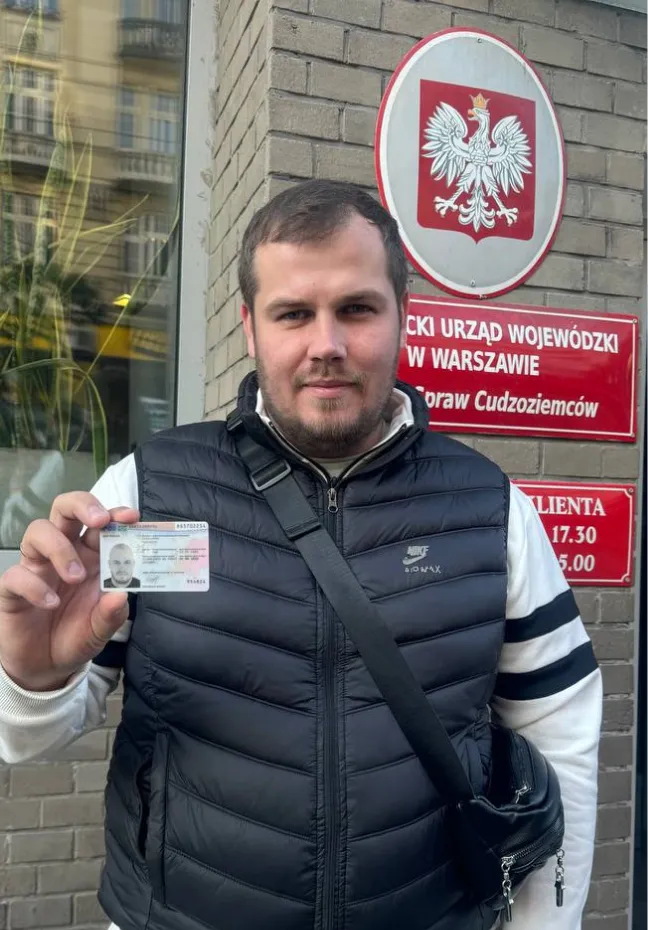
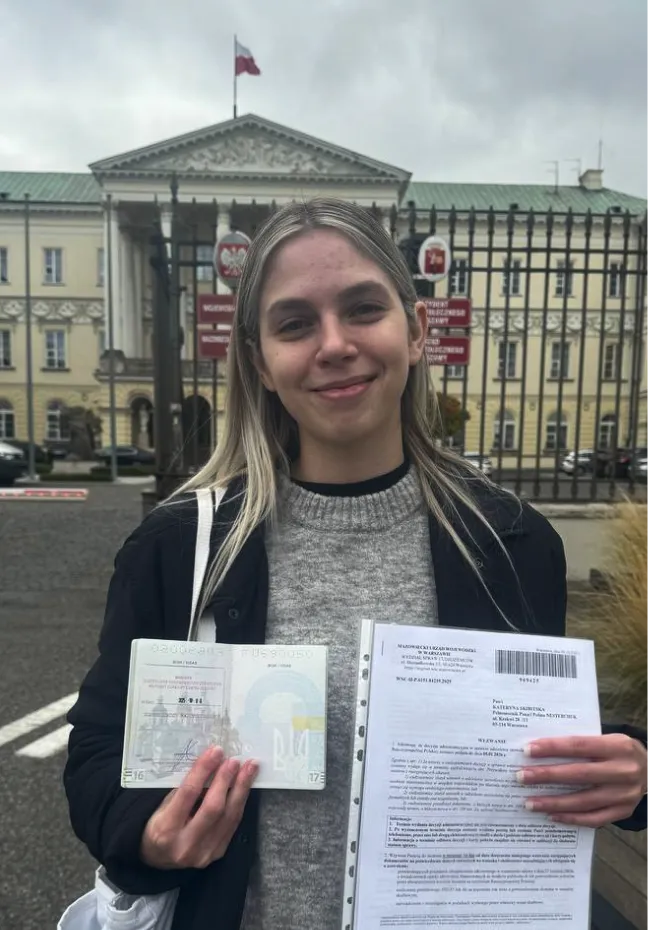
Parents secured their residence cards, settled into life in Poland, sorted out housing and schools — and only months later discovered their child had been living there without a single legal document. This happens far more often than people expect. A residence card for a child is issued separately, regardless of the parents’ status. And the process has details that are easy to miss the first time around.
Does a Child Need a Separate Residence Card in Poland?
Yes, and it is mandatory. A parent’s residence card does not automatically extend to their child. Every foreign national on Polish territory — regardless of age — must hold their own residence permit if staying longer than 90 days within any 180-day period.
A child with a Ukrainian passport who enters Poland with their parents is legally present for the first 90 days. After that, it’s either departure or applying for a temporary residence card. Without it — a violation of Polish immigration law, even if both parents have full documentation.
In our practice, parents frequently assume the child is included in their application. That’s not how it works. The application is separate, the decision is separate, and the card is separate.

Legal Grounds for a Child’s Residence Card
The legal ground for a child depends on the parents’ situation. The key here is not to pick a ground that seems logical — but to verify which one actually matches the family’s real circumstances.
Most common grounds for children:
- Family reunification — if one parent holds a residence card or permanent residence in Poland. This is the most frequent scenario for Ukrainian children. Full details on this ground are available on our family reunification residence card page.
- Education — for older children enrolled in a Polish school or university as an independent ground.
- Same ground as the parents — for example, if the father received a card through employment, the child may apply as a family member of a worker.
- Temporary protection for Ukrainians — under the law of 12 March 2022, for those who left Ukraine after 24 February 2022.
Choosing the right ground is already half the work. Getting it wrong means either a refusal or a time-consuming reapplication process.
What Documents Are Required for a Child’s Residence Card
The standard document package looks like this — though the specific list depends on the legal ground and the voivodeship.
- Completed residence card application (submitted by a parent or guardian)
- 4 recent passport-style photos of the child
- Birth certificate with a sworn translation into Polish
- Child’s passport or other identity document
- Proof of the child’s legal presence in Poland (entry stamp, visa, or certificate)
- Parent’s documents confirming the legal ground (residence card, employment contract, university enrollment, etc.)
- Written consent from the second parent (notarised or signed in person before an Urząd official)
- Proof of the child’s residence in Poland (rental agreement or housing declaration)
The birth certificate translation must be done by a sworn translator. A standard translation — even a high-quality one — will not be accepted.
Where To Submit Documents and How the Process Works
Documents are submitted to the Urząd Wojewódzki based on where the child actually lives. Families in Warsaw submit to the Mazowiecki Urząd Wojewódzki. Families in Wrocław — to the Dolnośląski Urząd Wojewódzki. Submitting to a “more convenient” office in another region is not permitted and will result in the application being rejected at intake.
For families in Warsaw, current information on appointments and procedures is available on our Karta Pobytu in Warsaw page.
- Book an appointment through the online system or in person, depending on the voivodeship
- Attend with the child — children over 6 must appear in person for fingerprinting
- Submit the documents and receive confirmation of application receipt
- Wait for the decision — typically 1–3 months depending on the voivodeship’s workload
- Pick up the card or receive a written decision on refusal with explanation
What Happens When Parents Are in Poland on Different Legal Grounds
This is an unusual but common situation among Ukrainian families. The mother has a residence card through employment; the father is under temporary protection. The child lives with both. Which ground applies?
- If the child is officially registered with the parent who holds a residence card — family reunification through that parent
- If both parents share equal custody and the child is registered with both — individual consultation is the only reliable path
- If the child holds temporary protection alongside one parent and that protection is still valid — staying on that status may be the simpler option for now
The VisaV.pl team encounters these mixed-status situations regularly — and every case requires a different strategy. There is no universal answer here.
How Much Does It Cost and How Long Is the Card Valid
The state fee for a child’s residence card is 340 PLN. This is a fixed amount regardless of the legal ground or voivodeship.
The card is typically valid for up to 3 years, but may be issued for a shorter period if the underlying ground is temporary — for example, if the parent’s employment contract ends sooner. The card cannot exceed the duration of the legal ground.
One important detail: when a child turns 13, fingerprints are retaken. When they turn 18, they become a legal adult and must apply for a new card independently as an adult foreign national.
Residence Card for a Ukrainian Child: What Changed After 2022
For Ukrainian children who arrived after 24 February 2022, a simplified temporary protection procedure is available — PESEL UKR and a status that allows legal stay in Poland. But this status is not a residence card and does not carry the same rights.
The difference is significant: temporary protection has a limited timeframe and depends on decisions by the EU and Polish government. A residence card is a more stable document with defined rights: access to education, healthcare, travel, and return without legal uncertainty.
For a full overview of all available grounds for Ukrainians, see our page on residence cards for Ukrainians in Poland.
For children born in Poland to foreign parents, the situation has a small simplification: a Polish birth certificate (akt urodzenia) is issued automatically, eliminating the need for a translated foreign document. However, applying for a residence card is still required.