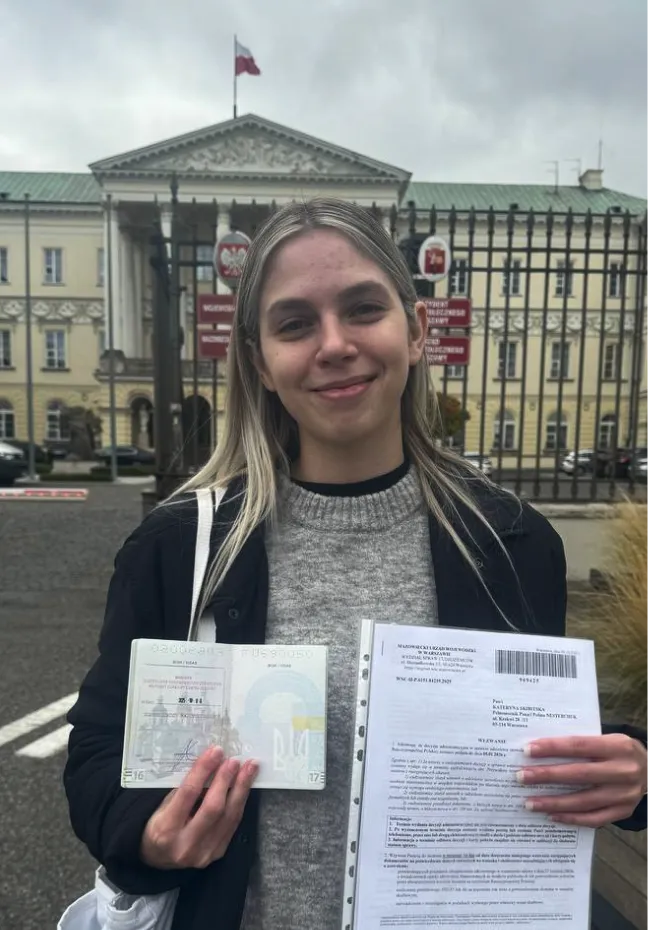
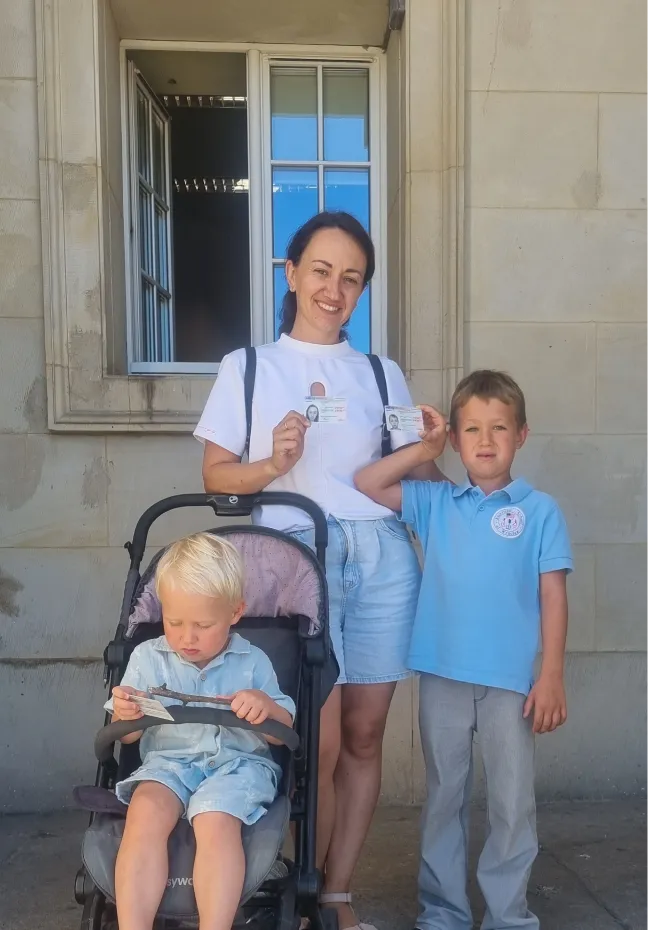
A child is born in a Polish hospital but isn’t a Polish citizen and has no document confirming their right to be in the country. The parents hold residence cards — and the child is legally in limbo.
This situation arises for thousands of foreign families every year. And while it causes anxiety, there’s a clear procedure and specific legal grounds that allow the child to be legalized without deportation and without the parents losing their status. The VisaV.pl team has mapped out the entire process from birth to receiving a residence card.
The Legal Status of a Foreign Child Born in Poland
First — an important clarification about citizenship. Poland does not apply the jus soli principle in general. Being born in Poland does not grant Polish citizenship, except in two specific cases:
- Both parents are stateless
- The parents are unknown
In all other cases — which covers the vast majority of foreign families — the child inherits the citizenship of the parents and needs a separate legalization of their stay in Poland.
Polish law is clear on this point: a foreign child born in Poland is entitled to a residence permit for at least the duration of the lawful stay of their parents or guardians, and for no less than 3 months.
Step 1: Register the Birth in Poland
What the hospital does
After birth, the hospital issues a birth card (karta urodzenia) and forwards it to the Urząd Stanu Cywilnego (civil registry office) in the municipality where the birth took place within 3 days.
What the parents do
Within 21 days of the birth card being drawn up (3 days in the case of stillbirth), one of the capable parents or their authorized representative must visit the same civil registry office to obtain a birth certificate.
At the visit, an application for the child’s name is submitted. A maximum of two names may be chosen. Requirements: names cannot be diminutives, indecent, or inconsistent with the child’s gender.
The Polish birth certificate contains:
- The child’s surname and name(s)
- Country, date, and place of birth
- Sex
- Full names, dates, and places of birth of both parents
- Name of the person who reported the birth
Step 2: Get the Child’s Home Country Passport
This is the most complex stage in terms of timeline. The child needs a passport from their country of citizenship before legalization in Poland can proceed. This means contacting the relevant consulate or embassy.
Typically, two things happen simultaneously: confirming citizenship and issuing the passport. A translation of the Polish birth certificate will be needed, and the diplomatic services may request additional documents.

Step 3: Identify the Basis for the Child’s Residence Card
Once the passport is in hand, legalization can begin. The correct basis depends on the parents’ status — and several options exist.
If the parents are staying visa-free
Unfortunately, this is the one situation where obtaining a residence card for the child is not possible. The visa-free period caps out at 90 days, and residence cards are issued for a minimum of 3 months. Given the processing time for an application, the result simply won’t arrive before the permitted stay expires.
If the parents are waiting for their own residence card decision
If the parents have filed for a residence card and are awaiting the outcome, their legal stay is confirmed by the zaświadczenie from the MOS 2.0 system. Offices must accept applications for the child’s card and process them alongside the parents’ cases. If the parents’ case isn’t concluded yet, the child’s card will be issued after the positive decision on the parents’ application.
Family reunification — the most common basis
Article 160 of the Law on Foreigners grants the right to a temporary residence permit to a minor foreign child born in Poland during the validity period of a parent’s national visa or temporary residence permit. The parents must meet the conditions of Article 159:
- Health insurance — including coverage for the child under the parent’s policy or through ZUS
- Stable income sufficient to support all family members
- Confirmed place of residence in Poland
An important practical nuance: this basis works if the parents continue to stay in Poland on the same grounds that were in place at the time of birth. If the basis has changed — use one of the following options instead.
Permanent residence (stały pobyt) for the child
Article 195 of the Law on Foreigners grants a permanent residence permit to a child if at least one parent holds a permanent residence card or an EU long-term resident card. This status is granted indefinitely.
A child’s right to permanent residence also arises when:
- The parent held a temporary residence card at the time of birth, but by the time the child’s documents are filed, the parent has obtained permanent residence or EU long-term resident status
- The parent was present in Poland at the time of birth on a residence card issued for tolerated stay, humanitarian reasons, subsidiary protection, or refugee status
Other circumstances — when nothing else applies
If none of the above grounds work, Article 187 of the Law on Foreigners allows for a residence card based on other circumstances when:
- The foreigner’s presence in Poland is necessary in connection with the right to family life under the Convention on Human Rights
- The foreigner’s departure from Poland would violate the rights of a child as defined in the UN Convention on the Rights of the Child to a degree that substantially threatens the child’s psychophysical development
In practice, offices rarely dig into whether these factors are genuinely present — if the parents are staying legally and the documents are in order, the card gets issued without complications. The “other circumstances” basis becomes the fallback when nothing else fits.
Step 4: Gather the Documents
Base document package required in all cases:
- Child’s passport
- Parents’ passports with grounds for stay (visa or residence card)
- Completed residence card application through MOS 2.0
- Child’s birth certificate (Polish)
- Parents’ income confirmation — employment contract, tax declaration, ZUS statement
- Health insurance for the child — a separate policy or confirmation of inclusion in a parent’s ZUS coverage
- Proof of residence — lease agreement, property documents, or free accommodation declaration
- Child’s digital photo in JPG format
Additional documents depending on the basis:
- For permanent residence — copy of the parent’s permanent residence card or EU long-term resident card
- For family reunification — proof that the parents hold the same status as at the time of birth
- For protection/refugee-based card — copy of the parent’s relevant residence card
Step 5: File Through MOS 2.0
The residence card application for the child is filed by the parents or legal guardians online through the MOS 2.0 portal. Authentication requires one parent’s Profil Zaufany, qualified electronic signature, or e-dowód.
All documents are uploaded in PDF format — the exception is the child’s photo, which is uploaded in JPG format. After submission, the system generates a UPO. Later, once an inspector reviews the case, a zaświadczenie appears in the dashboard — the primary document confirming the child’s legal status during the waiting period.
Step 6: Processing Times and Costs
The statutory processing period is 1 to 3 months, but in busy voivodeships it can take considerably longer in practice. Throughout this entire period, the child’s stay is considered lawful.
Costs:
- Stamp duty for temporary residence — PLN 340
- Stamp duty for permanent residence — PLN 640
- Card production for minors — PLN 50 (50% discount)
How Long the Residence Card Is Valid
Temporary residence — minimum 3 months, maximum 3 years (up to 5 years in rare cases). The period cannot exceed the parents’ own lawful stay duration.
Permanent residence — indefinite, but the physical card must be renewed every 10 years or when the holder’s appearance changes significantly — which for children is a common occurrence, since a newborn and a 3–5 year old look substantially different.